October 24, 2025

Digital transformation in hospitality is a topic that will be debated until the AI robots take over. Until then, experts continue to discuss the pros and cons, and how to actually transform hospitality tech stacks to meet the needs of brands and operators around the world.
Tevalis, Lane7, and Booked It are some of those experts. During the Hospitality Tech Expo, we shared insights into the technology playbook that digitally transformed Lane7’s operations.
These experts were:
– Kevin Dixon, Director of Partnerships at Tevalis
– Paul Berryman, Director of Sector at Tevalis
– John Roberts, Head of IT at Lane7
And
– Brad Nobbs, CEO of Booked It.
Key takeaways from their seminar reflect the importance of unified technology in improving brand performance. However, with the heavy influx of SaaS platforms that are available, are brands at risk of re-fracturing their technology?
Read on to learn more…
Kevin kicked off the seminar with brand performance as the focal point and discussed the elements of the whole customer booking journey.
Paul: “As hospitality software providers, we look at how we can increase secondary spend for the operator, both through the booking journey and through our hospitality tech stack.”
Lane7 went through a “significant digital transformation” – Kevin asked,
“What were the initial drivers that you and the business were experiencing?”
John explained:
“Throughout my time in hospitality, we always used to shoehorn technology design for another industry or sector into what we’re doing. We took the decision to partner with solutions that are designed and tailored to what we’re doing.”
The teams achieved:
– Complete replacement of the tech stack in the space of 6 to 8 weeks
– Massive rollout across the UK
– Taking what they’d seen previously in restaurant booking systems and moving towards ticketing designed for what Lane7 are doing
– The teams get the reporting, insights, and the customer dashboards
– Much better insights into what they’re doing, what they’re selling, and the brand performance
“Having a system and partners now that understand our business, understand our customers, and help us build the platform in to where we want to go, has given us a massive advantage.”

Prior to their digital transformation, Lane7 were using solutions that the teams had to make fit into the business. These systems and platforms were restaurant-based and couldn’t adapt to the needs of the competitive socialising venues.
Kevin: “Those solutions did not fit, but you made them fit. What sort of pain points were you experiencing? What problems were they causing for you?”
John lists the pain points Lane7 faced:
– The main issue was reporting and analysis.
– An example is enabling us to have one single view of the customer journey.
– Previously, everything was individually reported on, and now we have a single customer journey.
The key takeaway here is that with the new system in place, Lane7 has access to actionable information.
Lane7’s transformation couldn’t have started without our highly valued partner, Booked It.
Kev asked:
“To undergo that journey, you took on the services of Tevalis and Booked It, amongst some other partners. Brad, where did Booked It come into this journey? What was the value proposition here to alleviate those pain points?”
Brad explained:
“We spent a lot of time talking to John and the team around their requirements. Our solution isn’t off the shelf; it’s very much customised. We have to understand that every type of business requires a slightly different customer journey, so for us it’s really optimising that booking journey for the types of customers that Lane7 has.
Even just understanding the profile of the customers, whether that’s the age range, the locations, understanding that each customer will book slightly differently. We spent a lot of time with the team understanding those requirements.
Lane7 is a multi-activity business and has the ability to upsell food and beverages through packages. So, for us, it was about optimising the journey for multi-activity and upselling food and drink with the aim of increasing dwell time by the number of activities the customer books. And increasing the average transaction value.
How we can integrate with the other solutions, with Tevalis being the point-of-sale, was the big one. The customer can book online, they can redeem that booking when they arrive on site, if they’ve booked a package, they can redeem that package, and that can link in with the till system.”

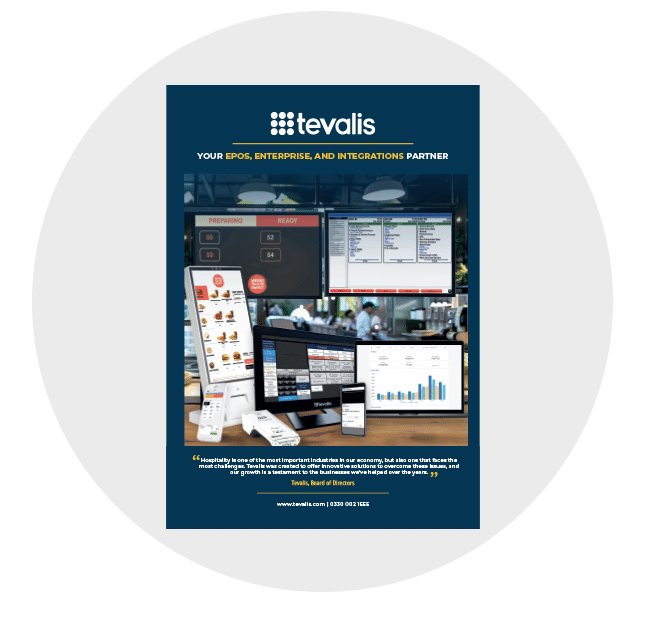
Fill in the details to take a look at our suite of hospitality technology.
Brad neatly tied them into further discussing the wider tech stack requirements, with Paul discussing his approach to the overall digital transformation and what they were looking to achieve.
“Firstly, it’s something we hear all the time in this industry, especially with integrations, is that we ‘have a workaround’, and we didn’t want a customer just to have a workaround. Especially during the booking journey.”
This links back to John’s comment about previously making the technology fit rather than getting the tech that already fits the business.
Paul continued:
“Packages, for example, were often sent through as a secondary ticket, and we didn’t want that. We wanted the ability to understand the products, PLUs, so that reporting could be there, and a simple process for the customer journey, instead of just looking like we’re booking a secondary item.”
Were there any other considerations you had to make during the consultative process?
“We had a big requirement for more portable POS, to have the staff able to make transactions on the go rather than having a fixed POS unit. Delivering an mPOS integrated with payments to make things more seamless.”
mPOS is hugely popular among hospitality brands and front-of-house staff. It’s convenient, removes manual errors and miscommunications, and speeds up service.
But, how does this change the experience for your guests when they’re in-venue? As Kevin mentions in the seminar, the guest experience is what drives your brand.
John explained:
“The move over to Tevalis and Booked it has enabled us to be on the floor easier. We now use the mobile ordering devices, which have been a massive help to the business. Small, individual devices with the app from Tevalis and a payment provider from a single device.
The big thing that I’ve found, especially with Booked It and Tevalis, is the amount of different platforms and SaaS that are coming up in the market, you need a partner that has the ability to integrate with a lot of different types of solutions, products and providers.
A partner that can react quickly to that and already has a lot of pre-existing API integrations. This enables you to move with the times and emerging markets as long as you have a partner that’s open to building those integrations and supporting you. It’s a massive benefit.”
Kevin responded:
“That’s exactly where Tevalis fit. My job is working with the team in the background to support 100s of technology partners integrated to our central piece of tech that can deliver just that. Provide the choice and best-in-class technology and integrations, and also deliver the agility to make the new partnerships and new integrations happen, based on your requirements as the operators.
Those requirements are driven to you as the operator by the consumer behaviour.
It’s incumbent on us to be as agile as possible and provide robust APIs to allow for additional partners and additional integrations.”
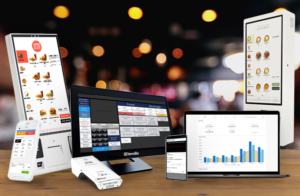
“The data we’re able to get out of the two systems now is enabling us to make the right decisions,” explained John.
Kev continued: “Using data and partnerships with an agile approach – were there any suggestions or guidance that you delivered to the journey? Was there something Booked It could do alongside Tevalis, alongside what’s available, and it was really going to make a difference to their operations?”
Brad described:
– The previous system that Lane 7 was using had a lack of data; we didn’t have much historical data to base certain decisions on.
– Really early on, we made it clear that we wanted to do A/B testing so we could see how different customers would behave when placing a booking.
– We could have one journey without any upsells and then one that did, and we’d check the conversion rates of both to see what was really having an impact.
– We were close to the data and could see where customers were dropping off on the journey.
– Not just about the pre-visit and pre-booking process, but once the customer has booked, what about the communication they receive up until their visit, how seamless can we make it when they arrive on site, and redeeming the package.
– We didn’t have these data points previously, so we had to learn them quickly prior to going live.
– We’ve been live 18 months now, so we’ve got 18 months of data that enables data-driven decisions.
“The evolution helps shape those decisions now. Not just a hospitality operator: you’re in a growing and unique space within hospitality, in the experience economy and competitive socialising.
Having the tech to deliver to your customers is great, but what’s your view on the wider industry? What are the impacts on experience-led spending?” Asked Kevin.
“Competitive socialising has seen massive growth in the last 2 or 3 years; it’s exploded in the market.
It’s becoming more difficult; it’s now hugely saturated, and everyone is getting into competitive socialising and gaming. The market is tougher; it’s all about innovating, it’s about giving the guests the best experience.
Part of what Brad was discussing as well brings us to the future of where we’re going. The next big thing is to automate the customer journey as much as possible, ideally try and automate everything from online booking, to starting the game, to getting to the venue, to experiencing the game, giving our team on-site more time to go and spend with the customers.”
John emphasised the importance of spending more time on making sure the guests are happy than on the admin side of the business.
The hospitality experience in general is one of the most devastatingly impacted sectors of industry, not just in the UK but across Europe and the wider world. It’s impacted by socio-economic events, geopolitical events, and catastrophes such as the pandemic of 2020. It changes the future, and it changes consumer behaviour.
“What attributes to the rise in competitive socialising in the first place is that people would rather go out less but spend more as long as they have an experience to take away with them,” explained Kev.
Paul expanded on this point:
– People are still going out, but not as frequently, but they are still spending.
– They need to have a good experience because there is a lot of saturation. In a saturated market, if they have a bad experience, they’re not likely to go back, but if they have a good experience, they’re likely to tell their friends and return.
– Delivering a good tech platform and making sure the customer journey is as simple and seamless as possible is vital for that.
John also said:
– People don’t go out as much now, but they’d rather go out and spend one big night every few weeks or a month.
– Young people aren’t drinking as much now; it’s about giving people an experience on a night out that’s still fun, that can be done with alcohol or without alcohol. And the market is changing for young people now.
– To us, it’s all about innovating, new games, constantly changing what we’re offering, and new experiences.

“So, what comes next?
Market saturation is something that competitive socialising is experiencing because everybody is implementing a shuffleboard or a pool table, or some level of activity, even inside a venue that wouldn’t normally have those sorts of activities.
What sets Lane 7 apart?” Kevin asked.
John explained:
“We’ve got a few new things coming that I can’t really talk about. What we’re trying to do is go out to market and find new gaming being built and try and get exclusivity on anything coming out in the market.
We’ve just developed smoke-machine-triggered bowling lanes, so our lanes, when you get a strike, it fires off a smoke machine.
4 or 5 years ago, I was migrating everything to SaaS platforms; now, some of the things I’m trying to move back in-house again. It’s an interesting mix of trying to use the best in the market but not spending too much money.”

As John mentioned, the influx of new SaaS platforms is both a blessing and a curse. There are platforms for every touchpoint and data requirement for every hospitality brand, but when do operators say enough is enough?
Kevin raised an important point:
“How businesses work in partnership, like Tevalis and Booked It, how we’re reconnecting an otherwise fractured tech stack, we’re creating this joined-up ecosystem. But there are so many SaaS platforms now, you’re at risk of refracturing that tech stack. How can we work together as providers to reunify?”
Brad responded:
“I think a lot of it is around using multiple platforms; the biggest issue is the amount of data sources and data feeds. You’re trying to analyse the data from all these different platforms.
A prime example of what we’re looking to do with Lane 7 is to pull all of these multiple data streams into one place. So, Lane 7 as an operator and a client can view everything in one place. Using multiple platforms isn’t so much of a problem if you have one place where you can analyse the data, but also the dashboard where the data is presented is in a format that allows you to make decisions. Sometimes you see dashboards with almost too much data, and you don’t know where to look.
That’s what we’re trying to do: put it in a simple format to make decisions off the back of it.”
Kevin continued on Brad’s point:
“If you’ve mapped things correctly, and you’re working with the right partners, and you have automation protocols in place, you have a few central points of data gathering information. That brings in efficiencies to the admin process, reduces the amount of physical work hours needed in extrapolating that data and making those decisions.”
After discussing various areas of digital transformation and the importance of data, the panel brings their insightful discussion to an interesting conclusion. The topic that dominates conversations across all industries at the moment: AI.
Kevin’s final question was:
“What are we not talking about today that we really should be?”
Paul was first to answer, with his firsthand experience of hospitality operations, opening up a key discussion.
“We hear about AI a lot and how it’s going to affect our industry. Having that is something to think about.
We’re working on the ability to build your own dashboards and reports. That single source of truth is really important.
Self-service is also a big thing that we’re seeing a lot of in venues. Ultimately, the ability to take a member of staff away from the order process and give it all into the hands of the customers.”
John continued with:
“AI is a bit of a bugbear for me. Every single software is trying to shoehorn some sort of AI into it, and 80% of those platforms don’t need AI in them at all. There are a lot of great uses, but AI in itself is becoming a big issue internally. The amount of AI platforms out there that do a million and one different things, and you’ve got users signing up for this and that, and these platforms hold massive amounts of confidential data that you have no access to, no management of.
There are some great uses for AI, projection, management, data analysis.
Self-service is my big one. That is the end goal – guests to book online, walk into a venue, scan themselves in, go to their gaming element, have their names on the game, directly go straight in, play the game. And then we can focus on customer experience rather than administration work.”

Our experts covered a lot in this half-hour session, but one clear takeaway from their combined experience of digital transformation is that collaboration with technology partners is essential. Listen to the full seminar here!